
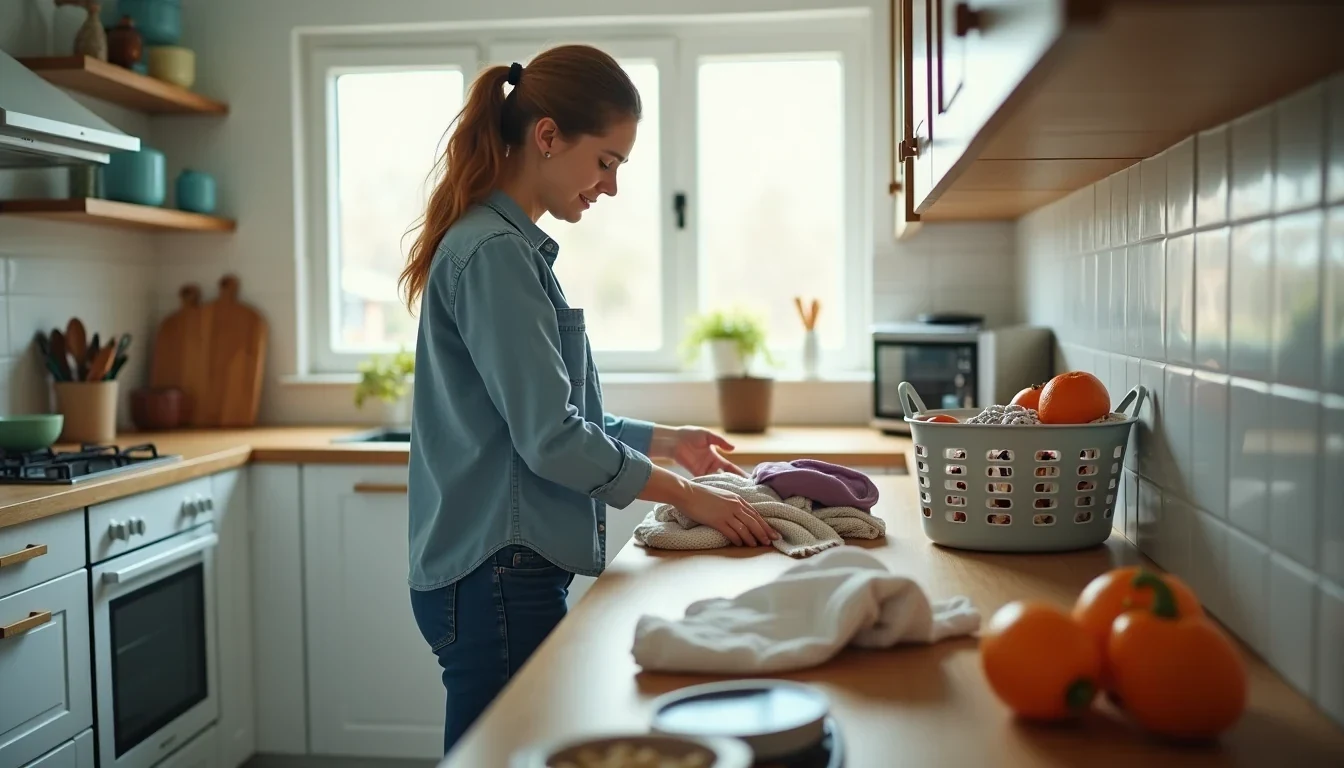
A home that always feels messy usually has one problem: the stuff has nowhere sensible to go. Counters become parking bays, the entrance table turns into a drop zone, and the same few objects keep migrating back onto the nearest flat surface. If you want order that lasts, stop trying to “clean the whole house” and fix the system that keeps failing.
The goal here is not a showroom. It is a house that can be reset in one decent Saturday morning, then kept under control with ten quiet minutes a day. Start small, work in the right order, and make every frequently used item easy to return in under a minute.
Start with one problem zone
Pick the worst offender and ignore the rest for now. A kitchen counter, entrance console, or spare-room desk is enough. If you try to sort the whole house, you will end up moving clutter from one room to another and calling it progress.
Work on one surface only. That keeps the job finite and gives you a clear finish line. Once the area is under control, you can move to the next trouble spot with the same method.
Take out the obvious rubbish
Before you sort anything, remove what is plainly junk. Toss packaging, broken items, old receipts, dead pens, and anything else that has no future use. This is the fastest way to shrink the mess without making decisions you do not need to make yet.
Do not start opening drawers or emptying cupboards. Stay with the visible pile. The point is to clear the surface, not to create a bigger disaster on the floor.
Use a basket for stray items
Keep a temporary basket nearby for things that belong somewhere else. Mail can go in it, toys can go in it, a charger can go in it, but only for the time it takes to return everything to its real home.
The basket must stay temporary or it becomes the same problem in a different shape. Empty it the same day. If it is full, stop adding to it until you have dealt with what is already inside. A medium laundry basket or sturdy tote is usually enough.
Group the leftovers
Once rubbish and stray items are out, sort what remains into small groups. Put all pens together. Put all keys together. Put all mail together. Put all remote controls together. Seeing the categories laid out properly makes the real volume obvious.
This is where duplicates usually show themselves. Three bottles of surface spray, seven shopping bags, four nearly identical kitchen gadgets, two old phone chargers, or a drawer full of plastic containers with no matching lids. You cannot organise around excess. First decide what deserves to stay.
Cut the duplicates down
Use a simple last-used rule for things that are not consumed. If you have not used an item in six to twelve months, it is a strong candidate for donation, recycling, or the bin. Keep the best version, not every version.
This is especially useful in kitchens and entrance areas where clutter grows quietly. Extra braai tongs, spare water bottles, duplicate scissors, and a stack of containers all eat space while making the useful version harder to find. Fewer items usually means faster tidying and less resentment every time you open a cupboard.
Give everything a fixed home
Storage only works after you have reduced the amount of stuff. Then assign a real place to each category and make sure the place is easy to reach. Frequently used items need a home you can reach, use, and put back in under a minute.
That rule matters. If keys live in a drawer across the house, they will end up on the entrance table. If the phone charger is buried behind rarely used cables, it will stay on the counter. Put the hook near the door. Put the tray near the charger. Put the everyday mug near the kettle. Convenience beats idealism every time.
Clear containers, drawer dividers, hooks, and small labelled boxes can help, especially for shared spaces. Affordable options at Pep Home, Mr Price Home, and The Crazy Store are usually enough. The goal is not fancy storage. The goal is obvious storage.
Clear one surface completely
Choose one surface that must stay usable, then clear it all the way. A kitchen counter is the best test case because it fills up quickly and affects how the whole room feels. Put only the things back that genuinely belong there.
If the surface still collects new clutter, it probably has no boundary. Add a tray, a small basket, or a hook system nearby so items have somewhere obvious to land without spreading across the whole counter. One clear surface changes the mood of a room faster than a whole afternoon of vague tidying.
Run a ten-minute reset every day
Pick one time and stick to it, ideally after dinner or just before bed. Spend ten minutes returning items to their fixed homes, wiping the counter, dropping stray papers into the right pile, and putting shoes, bags, and remotes back where they belong.
Keep it boring. Ten minutes is enough if the system is already working. Some days you will only clear the entrance area. Other days you will handle the kitchen counter and the lounge surface too. The point is to stop small messes from becoming a weekend job that eats half your Saturday.
A home that feels permanently messy does not need a heroic clean. It needs a smaller pile, better homes for the things you use every day, and a reset that happens before clutter gets a head start.